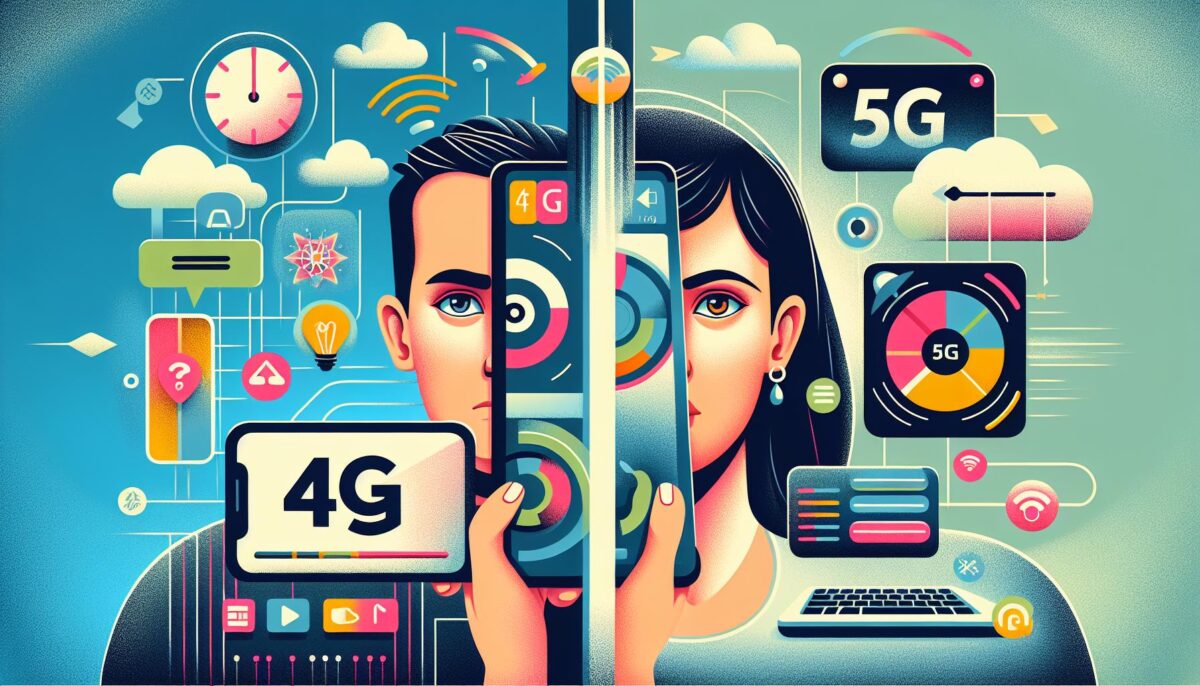
5G technology is the fifth generation of wireless communication standards that is anticipated to revolutionally change the way people use their smartphones. With lightning-fast internet speeds and more reliable connections, 5G aims to connect virtually everyone and everything together, including machines, objects, and devices.
One of the greatest perks of 5G for smartphone users is the speed it offers. While 4G LTE provides a downloading speed of up to 100 Mbps, 5G provides an impressive peak data rate of 20 Gbps. Such high speeds allow for smoother streaming, faster downloads, and more efficient app functionality.
Other than speed, 5G also brings the promise of lower latency. Latency, which refers to the delay before a transfer of data begins following an instruction for its transfer, will be significantly reduced with 5G. This is highly advantageous for things like mobile gaming, augmented reality (AR), and virtual reality (VR) – applications that require real-time feedback.
Moreover, the 5G technology will ramp up the capacity of the networks allowing more devices to be connected and communicate simultaneously, without compromising on speed and efficiency. This is particularly beneficial for the growing trend of smart homes and Internet of Things (IoT) devices, as a more substantial number of devices can be connected with less delay.
In terms of overall user experience, 5G thus means more than just faster speeds. The fifth-generation technology paves the way for more immersive entertainment, more helpful services, and possibilities for innovation. It facilitates high-quality video calls, extreme mobile gaming, seamless live broadcasts, and advanced VR and AR experiences – all on the move.
Looking forward to the implications in the tech-world, 5G signifies the start of a new era of technological advancement. It is expected to drive digital transformation across industries, such as healthcare, automotive, and agriculture. For instance, in healthcare, 5G can enhance telemedicine, remote recovery, and precision surgery.
Moreover, 5G can foster advancements in AI technology by supporting the high-speed exchange of massive data. Applications of AI, such as autonomous driving, facial recognition, and automated robotics, require real-time data exchange that 5G can provide.
That said, there are certain challenges involved in the widespread implementation of 5G. The issues of privacy and security will come upfront and center, given the technology’s capacity to connect with so many devices. Also, the cost of 5G infrastructure might be significant, which might result in higher prices for consumers.
In sum, 5G technology promises to revolutionize smartphone use and have broader implications for various industries. But as with any technology, practical implementation and management of potential challenges will be the key to its success.